
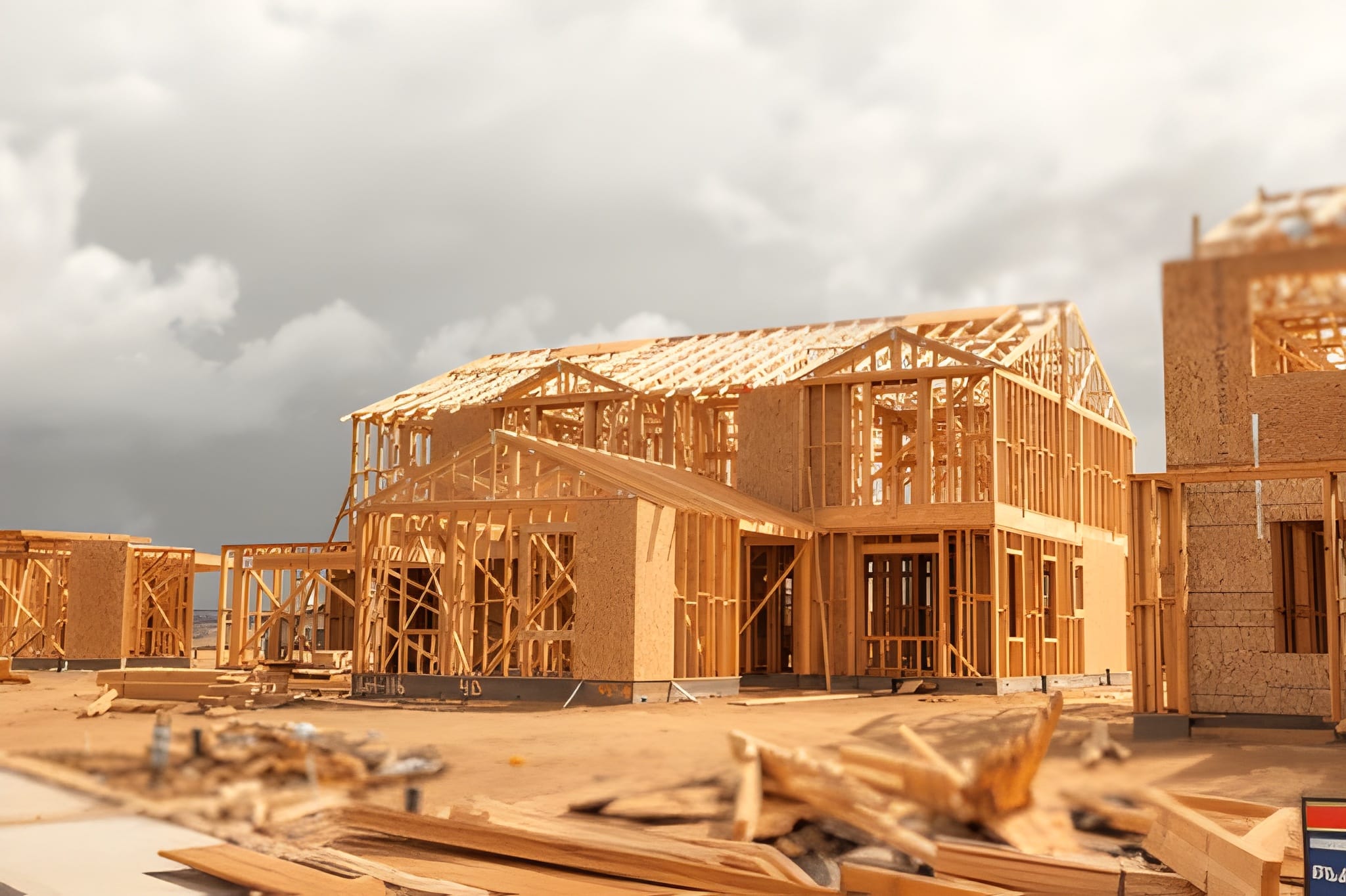
Building your dream home means making hundreds of decisions. The materials you pick affect everything from your budget to your home’s resale value. According to the National Association of Home Builders, material selections account for 35-40% of your total custom home construction costs. That’s a huge chunk of your investment. Getting custom home material choices right saves money now and protects your investment later. You’ll learn which materials deliver the best return, where to splurge, where to save, and what mistakes to avoid. Your custom home deserves materials that match your lifestyle, budget, and long-term goals. Let’s break down the choices that matter most.
Table of Contents
Flooring Materials That Last and Look Great
Your custom home material choices for flooring set the foundation for every room. Different spaces need different solutions based on traffic, moisture, and style.
Hardwood flooring remains the gold standard for main living areas. Oak, maple, and hickory offer durability and timeless appeal. Expect to pay $8-15 per square foot installed. Hardwood increases home value and lasts decades with proper care.
Engineered wood gives you the hardwood look at lower cost. It handles humidity better than solid wood, making it great for basements or areas with moisture concerns. Prices range from $5-12 per square foot installed.
Luxury vinyl plank (LVP) has exploded in popularity. Modern LVP looks remarkably like real wood but costs just $3-7 per square foot. It’s waterproof, scratch-resistant, and perfect for busy families with kids or pets.
Tile flooring works best in bathrooms, kitchens, and entryways. Porcelain and ceramic tile handle water and wear beautifully. Prices vary wildly from $2-20 per square foot depending on quality and design.
Carpet adds comfort to bedrooms and family rooms. Budget $2-8 per square foot for quality carpet with good padding. Higher-end wool carpets cost more but last longer than synthetic options.
Consider where each material goes:
- High-traffic areas need durable, easy-clean options
- Bedrooms can use softer, more comfortable materials
- Wet areas require waterproof solutions
- Open concept spaces benefit from consistent flooring throughout
Roofing Options for Different Climates
Your roof protects everything below it. Smart custom home material choices for roofing match your climate and budget.
Asphalt shingles dominate American roofing for good reason. They cost $3-5 per square foot installed, last 20-30 years, and come in countless colors. Architectural shingles look better than basic three-tab versions and add dimension to your roofline.
Metal roofing lasts 40-70 years with minimal maintenance. Standing seam metal costs $7-14 per square foot but saves money long-term through durability and energy efficiency. Metal reflects heat in hot climates and sheds snow in cold regions.
Clay and concrete tiles suit Mediterranean, Spanish, or Southwestern designs. They last 50+ years and handle extreme heat well. Expect to pay $10-20 per square foot. Your home’s structure must support the extra weight.
Slate roofing represents the premium option at $15-30 per square foot. Natural slate lasts 75-200 years and looks stunning. Few materials match slate’s longevity and appearance.
Climate considerations matter:
- Hot, sunny areas benefit from reflective or light-colored roofing
- Heavy snow regions need steep pitches and strong materials
- Hurricane zones require impact-resistant products
- Rainy climates demand excellent water shedding
Exterior Siding Materials Compared
Siding defines your home’s curb appeal and protects against weather. These custom home material choices balance appearance, maintenance, and cost.
| Material | Cost per sq ft | Lifespan | Maintenance | Best For |
|---|---|---|---|---|
| Vinyl | $3-8 | 20-40 years | Very Low | Budget-conscious buyers |
| Fiber Cement | $6-12 | 30-50 years | Low | Modern or traditional styles |
| Wood | $8-15 | 20-40 years | High | Classic aesthetics |
| Brick | $10-20 | 100+ years | Very Low | Traditional homes |
| Stone Veneer | $12-25 | 50+ years | Low | Luxury appearance |
| Stucco | $6-10 | 50-80 years | Medium | Southwestern designs |
Vinyl siding offers the best value for budget builds. Modern vinyl looks better than older versions and requires just soap and water for cleaning. It doesn’t rot, won’t attract pests, and comes in many styles.
Fiber cement siding (like James Hardie) costs more but performs better. It resists fire, termites, and rot. You can paint it any color and it holds paint longer than wood.
Wood siding provides authentic beauty but needs regular staining or painting. Cedar and redwood resist rot naturally but still require maintenance every 3-5 years.
Brick and stone deliver premium looks and amazing durability. They’re expensive upfront but virtually maintenance-free for life. These materials work well as full siding or accent features.
Mix materials for visual interest. Use stone on the lower third, siding on upper sections, and board-and-batten accents. Multiple materials create depth and character.
Kitchen and Bathroom Countertop Selections
Countertops get heavy daily use. Your custom home material choices here must balance beauty and practicality.
Granite remains popular at $50-100 per square foot installed. Each slab is unique, and granite handles heat and scratches well. It requires periodic sealing to prevent stains.
Quartz (engineered stone) costs $60-120 per square foot. It’s more consistent in appearance than granite and never needs sealing. Quartz resists stains and bacteria better than natural stone.
Marble creates elegant spaces at $75-200 per square foot. It scratches and stains easily, making it better for bathrooms than busy kitchens. Regular maintenance keeps marble looking good.
Butcher block brings warmth to kitchens at $40-80 per square foot. Wood counters need regular oiling and can’t handle hot pots directly. They work great for islands or prep areas.
Laminate starts at just $15-40 per square foot. Modern laminates look much better than old versions. They won’t handle heat or sharp knives like stone, but they fit tight budgets perfectly.
Solid surface (like Corian) costs $40-80 per square foot. You can repair scratches by sanding them out. Seamless installations look clean and modern.
Kitchen counters see harder use than bathroom vanities. Save money by using premium materials in the kitchen and more affordable options in bathrooms.
Window and Door Material Decisions
Windows and doors affect energy bills, security, and aesthetics. These custom home material choices impact comfort and costs for decades.
Vinyl windows cost $300-700 per window installed. They never need painting, insulate well, and work in any climate. Most new homes use vinyl windows for good reason.
Wood windows run $500-1,200 per window. They look beautiful and insulate excellently. Plan for painting or staining every few years. Wood-clad windows combine wood interiors with low-maintenance exteriors.
Fiberglass windows cost $500-1,000 per window. They’re stronger than vinyl, won’t warp, and can be painted. Fiberglass lasts longer than vinyl in extreme temperatures.
Window glazing matters as much as frame material:
- Single-pane: Never use in new construction
- Double-pane: Minimum standard for energy efficiency
- Triple-pane: Best for very cold or hot climates
- Low-E coatings: Reflect heat and UV rays
Entry doors range from $500 for basic steel to $5,000+ for custom wood. Fiberglass doors ($800-2,500) look like wood without maintenance needs. Steel doors provide security at lower cost.
Invest in quality windows. Poor windows waste energy and money every month. Good windows pay for themselves through lower utility bills.
Learn more about energy-efficient materials at the Department of Energy’s Building Technologies Office.
Insulation Types and Energy Efficiency
You can’t see insulation after construction, but it affects comfort and bills daily. Smart custom home material choices for insulation save money for years.
Fiberglass batt insulation costs $0.50-1.50 per square foot. It’s the standard choice for most homes. Proper installation matters more than the material itself. Gaps and compression reduce effectiveness dramatically.
Spray foam insulation runs $1.50-3.50 per square foot. Closed-cell foam creates an air-tight seal that stops drafts and moisture. Open-cell foam costs less but doesn’t provide moisture barriers.
Blown-in cellulose works great for attics at $1-2 per square foot. Made from recycled paper, it settles into all gaps. Add more anytime to increase R-value.
Rigid foam boards cost $1-3 per square foot. They work well as exterior sheathing and basement insulation. High R-value per inch makes them good for tight spaces.
R-values (insulation effectiveness) vary by climate:
- Warm climates: R-30 attic, R-13 walls
- Mixed climates: R-38 attic, R-19 walls
- Cold climates: R-49 attic, R-21 walls
Don’t skip insulation to save money. The small upfront savings cost you thousands in higher energy bills over the home’s life.
Check guidelines from the Environmental Protection Agency’s Energy Star program for your region.
Budget-Friendly vs. Premium Material Trade-offs
Every custom home needs strategic compromises. Know where to spend and where to save on custom home material choices.
Where to splurge:
- Roofing: Lasts decades, protects everything
- Windows: Impact daily comfort and energy costs
- Kitchen counters: Heavy use, hard to change later
- Plumbing fixtures: Quality prevents leaks and repairs
- HVAC systems: Affects comfort and bills forever
Where to save:
- Interior paint: Easy to change anytime
- Light fixtures: Simple to upgrade later
- Cabinet hardware: Inexpensive to replace
- Bathroom tile in guest baths: Low traffic areas
- Decorative trim: Can add over time
Smart compromises:
Mix high and low. Use premium hardwood in main areas, LVP in bedrooms. Choose granite for kitchen counters, laminate for laundry rooms. Install expensive tile in the master bath, builder-grade in guest baths.
Phase your upgrades. Build with good bones (structure, insulation, windows) now. Finish basements or add luxury features later when budget allows.
Buy materials yourself for some items. Contractors mark up materials 20-40%. Purchasing your own light fixtures, tile, or hardware can save thousands. Just clear this with your builder first.
Time purchases strategically. End-of-season sales offer huge discounts on materials. Buy winter items in summer and vice versa.
Final Thoughts
These custom home material choices shape your home’s quality, comfort, and value. You now know which materials deliver the best performance in each area, where to invest for long-term savings, and where you can save without sacrificing quality. Building a custom home lets you choose exactly what you want. Make those choices count.
Ready to build your dream custom home with confidence? BuildDP connects you with experienced custom home builders who know materials inside and out. Our network of verified contractors helps you make smart material decisions that fit your style and budget. Stop feeling overwhelmed by endless options. Get expert guidance on every material choice from foundation to finish. Visit BuildDP.com now for your free consultation with custom home specialists. Your perfect home starts with the right materials and the right builder. Let us help you find both today.