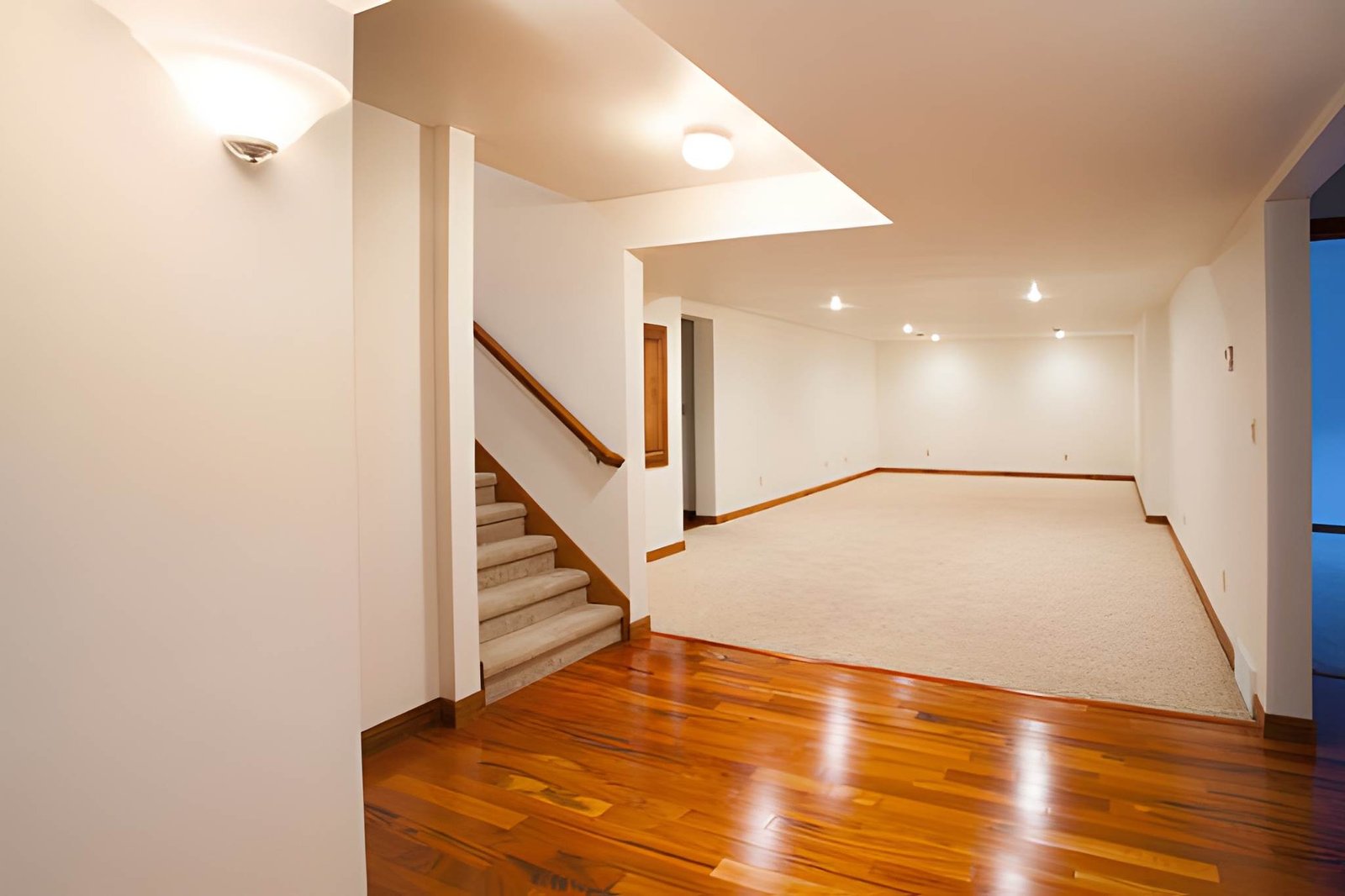
Most homeowners waste thousands on basement finishing simply because they never knew what to expect. In the U.S. alone, unfinished basements account for nearly 30% of wasted home square footage. You already own the space. The only question is what it will cost to make it livable.
What Does It Really Cost to Finish a Basement?
This is the first question everyone asks and the honest answer is: it depends. But that does not mean you should go in blind. The national average sits between $7 and $23 per square foot, with most homeowners spending between $18,000 and $34,000 for a full basement finish on a 1,000 to 1,500 sq ft space.
That range exists for a real reason. A basic finish with drywall, flooring, and paint costs far less than a basement built out with a bathroom, bedroom, and custom lighting. Your location also plays a role. Labor in New York or California runs 40 to 60 percent higher than in the Midwest.
Cost Breakdown at a Glance
| Finish Level | Square Footage | Estimated Cost |
| Basic (walls, flooring, paint) | 1,000 sq ft | $7,000 to $15,000 |
| Mid-Range (bedroom, lighting, half bath) | 1,000 sq ft | $15,000 to $30,000 |
| High-End (full bath, wet bar, theater room) | 1,000 sq ft | $30,000 to $75,000+ |
| Per Square Foot Average | Any size | $7 to $23 per sq ft |
What Actually Drives the Cost Up or Down?
Once you understand what moves the needle, budgeting becomes much easier. These are the factors that make the biggest difference.
Space Size and Layout
Larger basements cost more overall but tend to be cheaper per square foot. A 500 sq ft project might run $12,000 while finishing 1,500 sq ft could come in at $28,000. Open layouts without complex framing also save money compared to dividing the space into multiple rooms.
The Condition of Your Existing Basement
If your basement already has good waterproofing, working HVAC access, and a clean concrete floor you are in a strong starting position. If there is moisture damage, mold, or cracked walls those need fixing before anything else. Remediation alone can add $3,000 to $10,000 to your project before the real work even starts.
Bathroom Addition
Nothing pushes a basement budget higher faster than adding a bathroom. Here is what you should expect:
- Half bath (toilet and sink): $3,000 to $8,000
- Full bath (toilet, sink, shower): $8,000 to $15,000
- Rough-in plumbing already in place saves $2,000 to $4,000
If your basement has existing plumbing rough-ins, use them. Moving plumbing means breaking concrete which adds significant cost.
Permits and Local Codes
Permits are not optional. Most municipalities require them for basement finishing and inspections are part of the process. Budget between $500 and $1,500 for permits. Skipping this step can create serious problems when you sell your home. Unpermitted work can delay or kill a sale entirely.
Where Does the Money Go? Real Cost Categories
Understanding where each dollar lands helps you make smarter decisions when comparing bids.
Framing is typically the first trade on site and runs $1,000 to $3,000 depending on how many walls you are building. Insulation follows and ranges from $1,500 to $4,000. Spray foam costs more upfront but performs better in moisture-prone basements.
Drywall and finishing labor runs $1,000 to $3,500 for a standard space. Flooring is where personal preference really affects the budget. Carpet is the most affordable at $2 to $5 per sq ft installed. Luxury vinyl plank runs $3 to $7 and ceramic tile can hit $10 or more per sq ft installed.
Electrical work tends to surprise people. Adding outlets, recessed lighting, and a dedicated circuit or two typically costs $1,200 to $4,000. If your panel needs an upgrade to handle the added load, that is another $1,500 to $3,000 on top.
Is a Finished Basement Actually Worth It?
The numbers say yes. According to industry data, a finished basement returns 70 to 75 cents on every dollar spent when you sell. On a $25,000 project that is roughly $17,500 to $18,750 added to your home’s value.
The bigger win for many homeowners is functional. A finished basement can serve as:
- A legal rental unit generating $800 to $1,500 per month in rent
- A dedicated home office adding real daily value
- A guest suite that eliminates the need for a larger home
- A kids playroom or family entertainment space
The one warning worth repeating: do not over-invest relative to your neighborhood. If comparable homes sell for $350,000 a $70,000 basement build is unlikely to return what you put in.
Smart Ways to Cut Costs Without Cutting Corners
You do not need to sacrifice quality to stay on budget. Small decisions made early save real money later.
- Place any bathroom near existing plumbing to avoid breaking the concrete slab
- Choose LVP flooring over tile and save $1,500 to $3,000 on materials and labor
- Handle painting yourself and pocket $500 to $1,500
- Buy materials during holiday sales at major home improvement stores
- Avoid changing the stair location since moving stairs is expensive structural work
- Get at least three itemized bids so you can compare line by line
Planning changes before construction starts is free. Making those same changes mid-project can cost two to five times more.
Questions to Ask Before You Hire Anyone
Hiring the wrong contractor is the single biggest financial risk in any basement project. Before signing anything ask these directly:
- Are you licensed and insured in this state?
- Will you pull all required permits?
- What exactly is included in this quote and what is not?
- What does your payment schedule look like?
- Can you provide references from similar basement projects?
A confident and experienced contractor answers all of these without hesitation. Vague answers or pressure to skip permits are clear warning signs.
Related: 10 Brilliant Eco-Friendly Detached Garage Ideas That Save Money
Conclusion
Finishing your basement is one of the highest-value home improvements you can make. Costs range from $7,000 for a basic build to well past $75,000 for premium custom finishes. The homeowners who come out ahead are the ones who plan carefully, hire right, and stay informed throughout the process.
You already own the space. Make it work for you. Visit builddp.com to start planning your project with the right tools and resources behind you